
Frequently Asked Questions
Find answers about Sarah's books, resources, events, and some of her thoughts on creative work.
When did you first start drawing?

Probably in my high chair, with pureed squash. This is me, painting with my little sister, Mary. But here's the earliest cartoon with words and pictures that I can remember making. I remember there was a comic strip in our newspaper, The Seattle Times, called The Wizard of Id, and the king in it was always yelling 'FINK!' at people.

Where do you get your ideas?


Where do you work?
I work in a studio at the Bovey Paradiso arts centre in Devon, in the town of Bovey Tracey, next to Dartmoor. Here's my desk. Behind it, you can spot a mixture of my own work and work that inspires me, or simply makes me happy.

When I first started illustrating, I worked from home, but I really struggled with having my work space ten feet away from where I ate breakfast; it's great being able to arrive at work in the morning and then leave it and go home. My longest-running studio mate was Gary Northfield, who was a huge help to me, learning about the business, and challenging me to make my drawings more lively and spontaneous. I've also shared space with Viviane Schwarz, Lauren O'Farrell, Ellen Lindner and Elissa Elwick, and learned a lot from all of them in different ways. Now Gary's actually my publisher, having started up Bog Eyed Books, and reprinting Vern & Lettuce!

Where can I find your books?
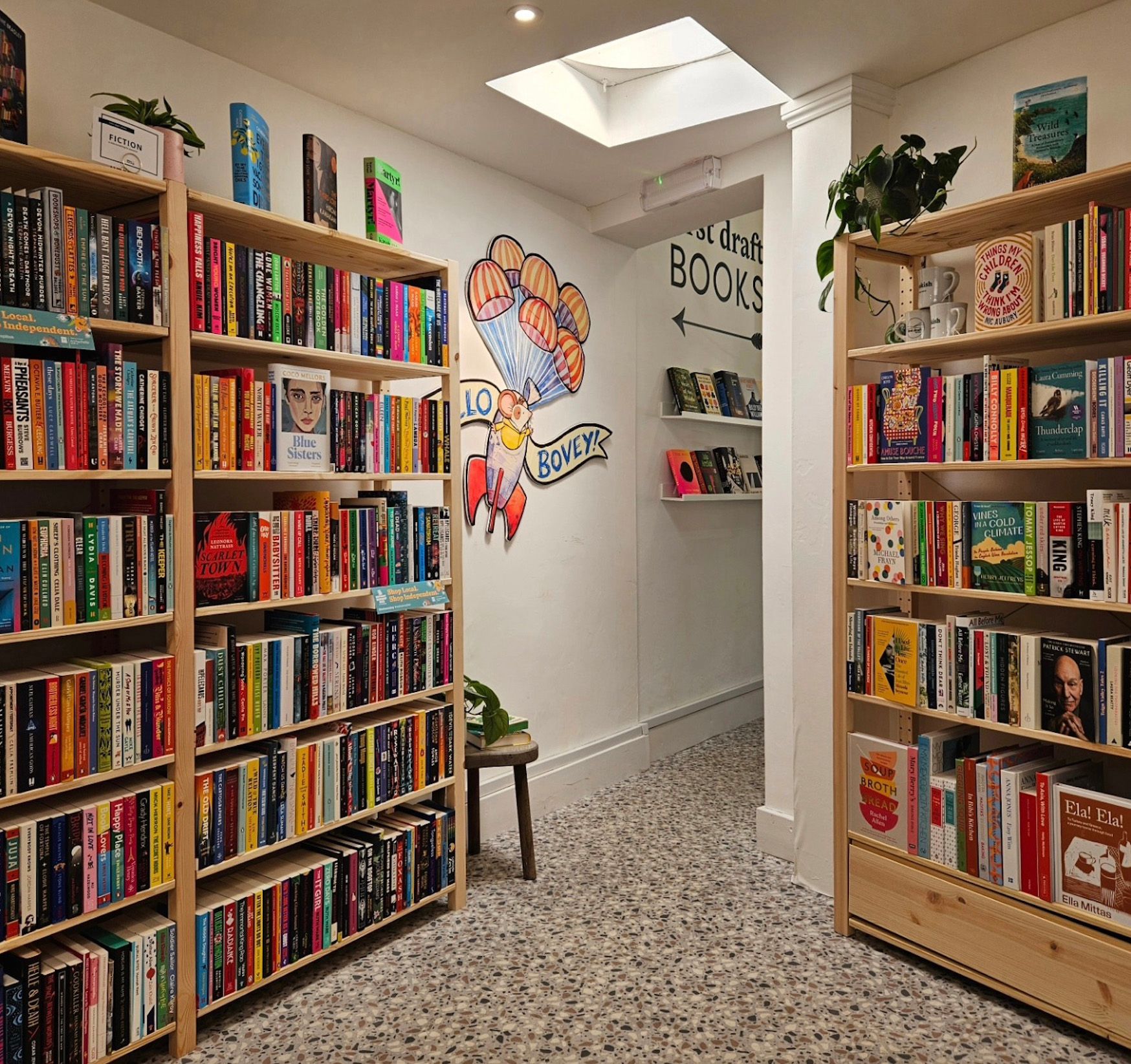
You should be able to find my books in bookshops and libraries (and if they don't have them, please do ask about them!) If you can support a local independent bookshop, that would be brilliant. My local is small-but-mighty First Draft Books in Bovey Tracey, Devon (pictured above), and the owner (Leslie Leggett) gets 30% commission when you buy books through this Bookshop.org link.
Based in Scotland? The Celtic House is based on Islay, in the Hebrides, and they have an Adventuremice page here.
Are you a big comics fan? Then support lovely Page 45 bookshop in Nottingham, who have a Reeve & McIntyre page here. Give them a boost and say hello from me!
In the USA, Bookshop.org is the best place to buy our Adventuremice books.
Besides buying books, how else can I support your work?
If you want to help me make more books, what can help most is if you post reviews on the major book websites, on your blog and on social media! And pre-ordering books is a HUGE help for both the booksellers and me: the sellers can gauge how many books to stock and know there's interest, and it boosts my first-week sales figures, which mean a lot to the people who make business decisions about how many more books to commission from me.
Where can I find out more about the #PicturesMeanBusiness campaign?
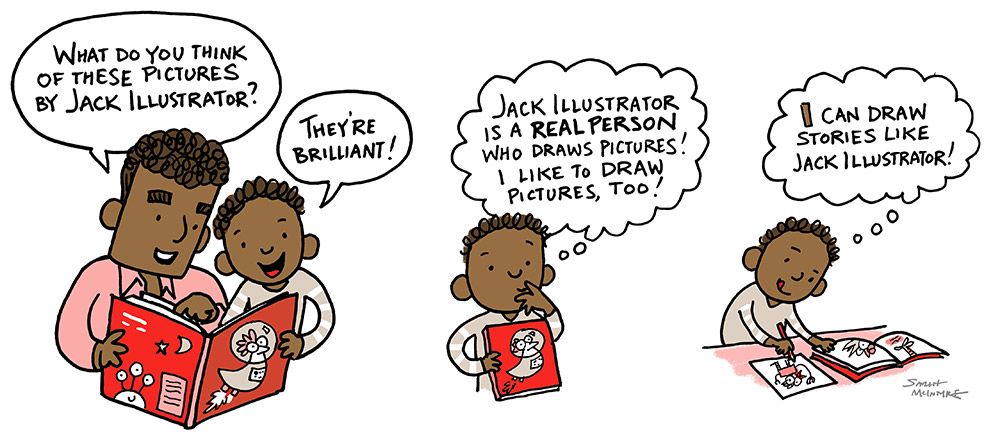
The main idea of Pictures Mean Business is to encourage publishers, writers, teachers and book lovers to credit illustrators for their work by showing them that when we do this, everyone wins. Here's the website, explaining in more detail: picturesmeanbusiness.com. The website was created and funded by illustrator Soni Speight.

Can you do an Author Visit to my school?
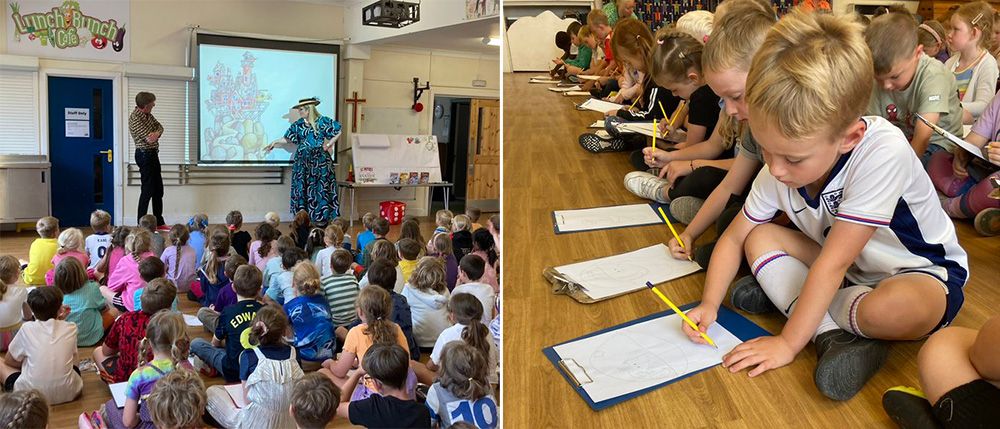
Thank you for asking! I live in Devon (in Bovey Tracey), so I'm more likely to consider a visit if you're based in the South West. Sometimes if we can combine the visit with several other schools in the same area or a book festival, it might make the trip more feasible.
These days I tend to do joint visits to primary schools with my Adventuremice co-author Philip Reeve (who lives 20 minutes away from me). Our showpiece is a one-hour, very interactive, all-school assembly that gets the children and teachers drawing and helping us come up with story ideas. We follow this with a book signing, and if you can link up with a local bookseller who can manage book pre-orders, it will allow the children immediately to get stuck into the books we've been inspiring them to read.
We do charge a fee, which we can discuss with you if you get in touch; it's very much dependent on how well you can organise book sales. If you're not interested in book sales, there's not a great chance we will come because we need to make a living, and school visits take us away from making our books. If your school is far away, we will also need you to pay for travel and accommodation.
If you want us to visit during the week of World Book Day, you will need to get in touch at least a year in advance. But consider an Author Visit at another time, where you won't have to pay higher World Book Day prices and be in such competition with other schools.
The success of an Author Visit is very much dependent on how well you prepare the children in advance! If the children have already read one or more of our books, and done a creative project on our books, they will be much more interested and ask relevant, thoughtful questions when they meet us.
Please direct enquiries to my assistant, Stuart Pyle: stuart @ jabberworks.co.uk, and copy me in: sarah @ jabberworks.co.uk.Here's an article I wrote called 25 Tips for Hosting an Awesome Author Visit!
Do you prefer making books by yourself or working with another creator?
I like doing both! When I write my own story, it means I get to decide exactly what I'm going to draw. But when I work with other people, sometimes we spark new ideas off each other and the ideas are better than ones I might have come up with myself. I love doing Comics Jams, where one person draws a panel, then other person draws a panel, and neither person knows where the story is going to go. You can see a fun example of one I did with my friend David O'Connell, called AIRSHIP. And here's how we made our picture book, Jampires:


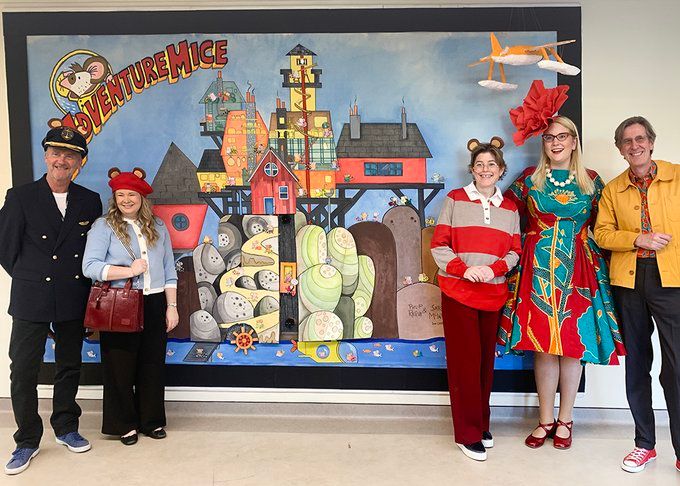
The other fun thing about working with a co-author is getting to run around together in silly costumes. Philip Reeve is always up for that! Here's our moon landing for our book Cakes in Space:

Who are your biggest influences?
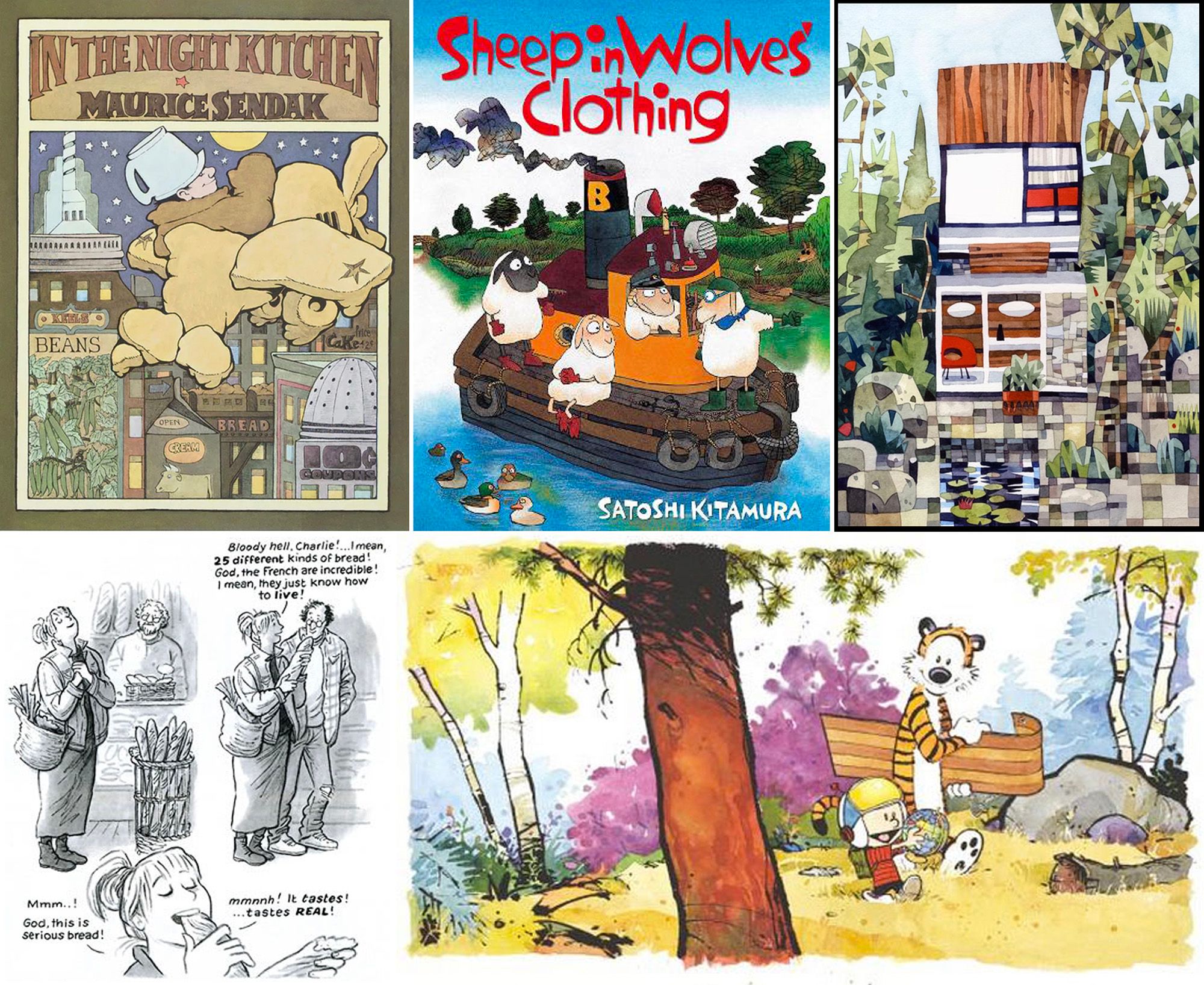
Thousands and thousands of other artists have inspired my work! But the top five might be Maurice Sendak, Satoshi Kitamura, Jonathan Edwards (aka Jontofski), Posy Simmonds and Bill Watterson. They're all terrific artists and storytellers, and I love they way they push themselves to achieve new and greater things.
What would your advice be to someone who wants to get picture books or comics published?
Don't wait until you think you're good enough to get published, start making lots of books and comics right now. Don't use AI; write and illustrate them yourself, or find another real person to work with. Your very uniqueness is what will make the books remarkable, and the joy is in the making, or the collaboration. By making books, you'll learn how they work, and you'll get a little better each time. And being able to finish a book is very important, it's good to get into the habit. Keep your early books simple, they don't have to be 200-page graphic novels. They might be quite small, and as short as eight pages, a couple folded pieces of paper. Here are some of the little books I've made through the years:

When you've finished your little book, you can make copies of it and give them to your friends, sell them as small-press comics fairs, or use them as business cards. Be sure to put your name and website address somewhere on it. It doesn't have to be a fancy website, you can get a free blog and start posting artwork and comic strips as you make them.

Here's a list of UK comics festivals if you think you might want to get a table and try selling some of your work. See if there's one in your area and then look up its website for details:

A few of the festivals are worth travelling a long distance to go to, such as Thought Bubble in Leeds and the Lakes International Comic Art Festival in Kendal. Consider sharing a table with a friend to cut costs. Try just going along to it the first year to get a sense of the festival's layout and keep an eye out for the best way to display your work.
Get familiar with the children's section or the comics section of your local bookshop. You'd be amazed by how many people want to get into children's books but haven't read any that have been published in the last five years. Perhaps keep a reading diary with notes about why you like certain books and don't like others. Read lots of other books outside the area you want to work. Watch films and animations and think about the different ways people tell stories in them.
I'm a creative person and I think making picture books might be a good way to express that. But I need to find some inspiration and motivation. Where should I start?
Do you want to make books at your own pace, just for fun, with no deadlines and total freedom to write and draw whatever you like? Or do you have a lot of energy, want to go into publishing books, and have the drive to learn what it takes to have a good head for business? There's nothing wrong at all with the first option.
I wouldn't recommend trying to earn a living by making picture books and comics unless you're so obsessed with them that it's almost unhealthy. To be a full-time professional illustrator, you can't just like drawing, you need to be the sort of person who is always drawing, who can't help drawing. And even then, it's not easy to turn your passion into the sort of regular money that can pay the rent.
If you're struggling to know where to start, it's helpful to examine the format of books. Sometimes knowing those limitations can be inspiring in itself. For example, when I'm planning out a story for a picture book, I already know that the most cost-efficient way to print one is to make it 32 pages. (Which means publishers will be much more likely to accept it.) So I grid out the book, as below, and write my book directly into the boxes. Then I can see how much space I have, and see the overall pacing of the story. If I think about it as filling these boxes, it's much easier for me. The covers take up four boxes, the endpapers take up four more, and the ISBN page and title page take another two. So that only leaves 22 blank pages (or 11 double-page spreads). Suddenly it doesn't seem like such a long book, the trick will be to fit everything in and simplify my story if it won't fit!

Here's how I filled those boxes for my picture book Morris the Mankiest Monster:

For more info about this, read my blog post Top Tip for Putting Together a Picture Book.
Are you a perfectionist? Everyone has to start somewhere, and maybe you need to make some bad books before you make the good ones. Here's a video of a TEDx talk I gave about learning from our mistakes. Sometimes we have to learn to be a bit more gentle with our work and with ourselves.
Video link is invalid or missing a YouTube id. Open video
Did you study at art college?

I didn't go to art college right away, I first studied Russian literature at Bryn Mawr College, in the USA. (I'm originally from Seattle.) I'm glad I didn't start off studying art directly after graduating from school, because it was during my study-abroad year in Moscow (and the second year I took off university to work at The Moscow Times) that I fell in love with Russian art and illustration, and that has been a big influence on me. Working as a copy editor at a newspaper also helped me think more about words, and improved my writing skills. When I moved to London, I took evening classes in illustration for a couple years and made lots of little books for myself. I was in my early 30s when I started my Master's degree in Illustration at Camberwell art college, with excellent course leader Janet Woolley. Having a big gap after my undergraduate studies was very helpful for me because by the time I got to art college, I had a big treasure chest stored up in my head of adventures I'd had and things I'd learned, and I was very focused about the kinds of questions I wanted to ask about making books as a business.
If you're trying to pick a course right now, remember that it's all about the teachers, not the reputation of the college. If a teacher is good, sets frequent assignments and sets regular times to give you feedback, the course will be good; if the teacher doesn't care, the course will feel like a big waste of money. Don't be overawed by a tutor who feels distant but seems cool and trendy; they need to care about you and have a certain amount of human warmth to them.
Check out my blog post Should you go to Art College?
Can you give me any drawing tips?
Try to draw something every day. Setting yourself challenges can be very inspiring.
* Keep a sketchbook or a drawing blog.
* Draw a room in your house. Try drawing it in various different ways: realistically, or play around with the perspectives like David McKee, Satoshi Kitamura or Mini Grey might do. (Look at their books to see what I mean.) Next, draw a building in your neighbourhood. Try drawing it different ways, focusing on different things: the signage, the windows, the roof, the colours, the textures, the lines, the people walking in front of it. If you emphasise any of these things, the pictures will look very different.
* Draw an animal. Draw that animal on a bike. Draw it sitting on your head. (Animals always look funnier sitting on your head.)
* I see a lot of sketchbooks where people draw only faces, or characters with no background. Try expanding that: draw characters in different contexts (in rooms, interacting with other characters, doing activities of some sort, speaking to each other). Have them sitting (or slouching) at a table full of objects, so you practice drawing other things.
How do you make your comics?
It depends if it's a simple, scrappy comic or something very polished. But here's how I draw a comic like Vern and Lettuce:


Here's a special article I wrote on my blog if you're totally new to comics but want to find out more about making them!
What is your favourite comic?
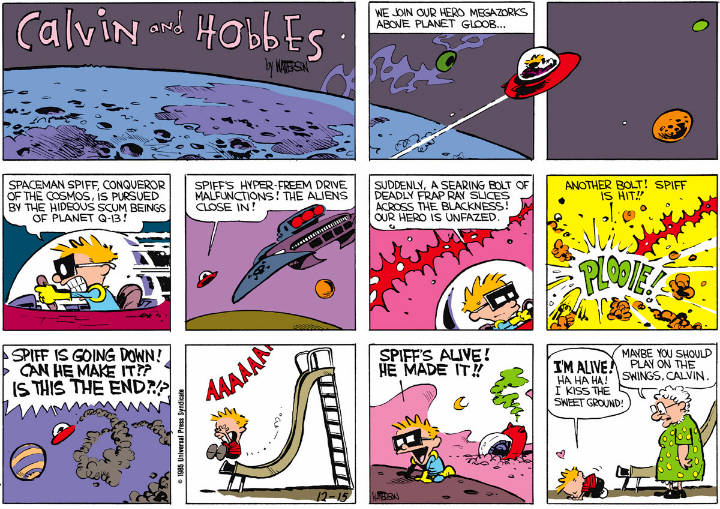
Calvin and Hobbes by Bill Watterson! The comic strip ran every day in The Seattle Times, in black and white, and in colour on Sundays. I loved it as a kid, I love it now, it works on lots of different levels.
May I use your website resources for children I work with?
Please do! The activity sheets and videos on my Jabberworks and Adventuremice websites are free for you to print out and use in schools, home schooling, at libraries, hospitals, anywhere it comes in handy! I only ask that you don't use them for commercial reasons or post the resources on your own website without getting permission from me. But please feel free to link to them!
What are some of the drawing challenges you've set for yourself?
Tree-a-Day: One year I decided I was going to get up early five mornings a week and each morning, draw one of the trees in Greenwich Park. I didn't manage it every single day, but I did it far more often than if I hadn't set myself a goal.


Hourly Comic: Hundreds of people do this on a set day every year, but you can do it anytime. Draw a comics panel, or a set of panels, about your day, one for every hour you are awake. Scan it, post it online, and turn it into a little book.

Draw yourself as a teenager: Lots of people tried out this Internet meme when it was posted.

Here's a four-video Booktrust series, leading you through a whole Comics Jam session packed full of top tips for making comics. This is video No.2:
Video link is invalid or missing a YouTube id. Open video
If you're on Twitter, you can join me and lots of other people in the Virtual Studio – @StudioTeaBreak – where we meet up on hashtags for fun drawing challenges. All ages and abilities welcome!

Can you point me toward any online courses?
Yes! I teach this online Curtis Brown Creatives course with my Jampires co-author David O'Connell. You can take the illustration track with me, the writing track with Dave, or do a track that combines both writing and illustrating. Check the CBC website to find out when the next course starts!

What suggestions would you give for putting together a portfolio?
These days websites and Instagram accounts are even more important than an actual portfolio, but it might be good to have printed images if you're going to visit a publisher in person. Show off your absolute favourite work, and the kind of work you want to make more of. Make sure it's relevant to the kind of work you're looking for. If you're trying to get work making books for very young children, the editor or art director will want to see how you draw children, animals, monsters, pirates, that sort of thing.
Try to capture a range of moods. When I first put together my children's book illustration portfolio, all the characters were smiling, and it was only when my (very honest) sister pointed it out, that I realised SO much smiley-ness looked kind of sickly. Show characters looking surprised, sneaky, grumpy, angry, and in a range of situations.
Think about how your social media account looks to an editor or art director who has looked you up. Is it full of holiday snaps, or pictures of you in bathrooms with your besties, doing pouty faces? If so, consider getting another account that only focuses on your art. Think carefully about posting too much about your moods and grievances; they can generate support but they can also scare people off from wanting to work with you. Don't fall into a cycle of using social media as therapy without thinking very hard about what you're doing and why. If you really need help, the Internet isn't a great place to get it; talk with people face to face, either friends or family who care about you or a professional who will understand your situation and be able to help you.
Your portfolio should be constantly evolving as you make new things. Don't get stuck in a rut pushing the same pictures or the same story around for years and years, always be working on the next idea.
If I'm a writer, do I need to find an illustrator to get my story published?
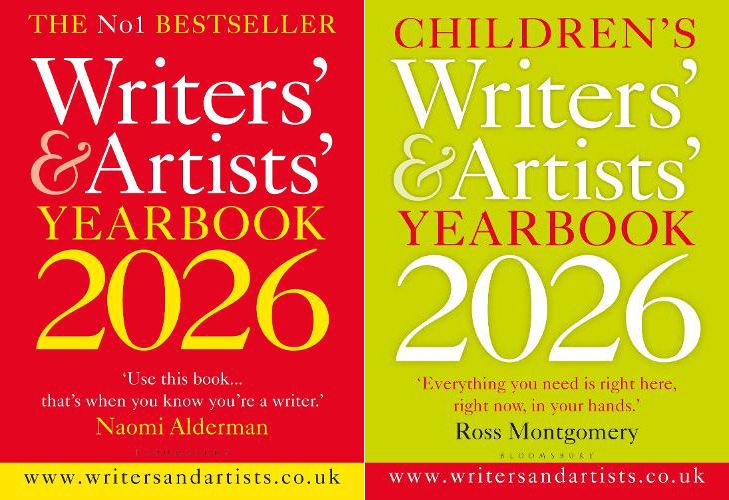
NO. This is a big myth, and agents and editors will back me up on this. There are lots of amazing illustrators out there, but fewer good writers, so if your story is very good, the right publisher may be interested in it. Editors will know lots of good illustrators with whom they're comfortable working, and they prefer to pair up a new writer with one of their own illustrators. The Writers' & Artists' Yearbook gives excellent guidelines for submission. Only team up with an illustrator if your teamwork is integral to what you're creating, don't just fish around for someone who can draw to make your work look more attractive to publishers.
Do I need an agent to get published?
No, you don't need an agent. But I have a literary agent named Jodie Hodges, and I love working with her because she makes sure my contracts are sound and organises my payments, so I don't have to spend time chasing up clients.
If you're having a hard time getting work, an agent probably won't help you get it. If you're getting so much work that you can't handle it by yourself, an agent may be what you need to help sort you out.
Where can I learn more about getting into publishing?

I used to recommend the British branch of the Society of Children's Book Writers & Illustrators (SCBWI), but it's been going through a difficult patch with its headquarters in the USA. (This is a recent edit – Aug 2025.)

If you've already had at least one book published, the Society of Authors is great if you need legal advice and contract help. Article: On author promotion – 8 ways not to be a spammer
The Writers' & Artists' Yearbook is your best bet for getting publisher details - names of people who might be interested in your work - after actually going to publishing events and tracking them down.
What's your No.1 tip for doing children's events?

Remember that events aren't really about you at all: children are just as interested in being seen by you as they are in seeing you. The more interactive you can make your presentation and the more attention you can give to people in the audience, the more excited they'll be about what you're presenting.

Be sure to check out my 25 tips for hosting an awesome Author Visit.
Can you give me any tips for finding my illustration 'style'?
Style isn't something to aim for, style is something other people might start to notice about your work as you keep experimenting and trying new things, until you find ways of working that most resonate with you. Don't worry about style, just do whatever it takes to make the story you're illustrating communicate the most effectively. Here's an article I wrote about this.
I have a great idea for a story. Would you be interested in illustrating it?
A lot of people ask me this, and while I'm honoured to be asked, right now I'd have to say no. You can get in touch with my agent about it if you like, but my publishers have already put me together with some writers I love working with. I've written a more detailed article about that here:

Can I send you my book idea or text for you to look over and give me feedback?
Unless I know you very well or you're taking part in one of my workshops, I'm afraid I won't be able to do this. Even if I do know you, I might be too busy, and please be understanding and don't push me about it. Critiquing manuscripts can even be dangerous for me, because it opens me up to future allegations of copying if I publish something similar.
What should I do during that long wait between sending out my book idea to a publisher and hearing back? I'm getting frustrated.
As tempting as it is to have big tired flop, this isn't waiting time, this should be your most active time. If publishers are thinking they might be interested in your book, there's a good chance they'll be researching you, to find out what kind of web presence you have, and what other work you've done. I'd say, don't sit around, get busy on the next project, and let your energy and excitement be in some way visible to them.
Can you put me in touch with [such and such] illustrator?
Have you tried looking at his or her website first? Usually people put contact details on their websites. If they don't put them there, there's a good chance they'd rather have you go through their agent or publisher, and you can find their contact details on their websites.
I get intimidated by all these other amazing illustrators out there, how can I ever compete with them?
This is an active choice you're going to have to make: when you see a wonderful piece of artwork, does it fill you with joy, or rage and jealousy? If you choose to see other artists as the competition, and let their successes burn away at you, you're always going to be unhappy; there will always be someone better or more successful than you.
You can choose to see other artists as esteemed colleagues, not enemies, and take pleasure in their work instead of thinking it always reflects badly on your own work.
You say you're too busy to answer my long list of questions for my university project, but whenever I look at your blog, you always seem to be running around having a lark. When do you get any work done?
I gave up sleeping years ago. No, really, if I sit all day in my studio answering e-mails, I won't have any fun left in me to put into the books I make and they'll be as stagnant as day-old diner coffee. In that sense, getting out and about and playing around with silly pictures I'm not intending to publish is very much part of my work.
I once heard the writer Neil Gaiman say in a graduation speech that he came to a point in his career when he realised he'd stopped being a professional writer and had become a professional e-mailer. I know just what he means!
My Illustration course leader says I won't pass unless I send out a list of survey questions to an illustrator. I know you won't do those, but may I copy and paste these answers into my homework and pretend you said them directly to me?
Absolutely – I give you total permission!
Do you have any tips for contacting writers and illustrators with questions?
Yes, make sure if you're asking questions, that they're ones you can't find by looking at their websites or blogs, or by looking things up on Google. Customise your questions, don't send them your generic homework sheet to fill out, they're not going to do your homework for you.
Don't tell them you're a Huge Fan but then they can see you don't even follow them on social media. Illustrators are busy people, so if they take time out of their work to answer your questions, be sure to respond with a short note, saying thank you.
What are your views on art at Artificial Intelligence (AI)?
I cringe when I see people have illustrated their stories with AI artwork. The way AI works is by scraping copyrighted artwork off the Internet and regurgitating that work without the artists being compensated. Not only is it theft by big companies, but it's sad, that you want to replace an activity that gives so much joy to people. We want robots to do the tedious work for us as humans, not take away the things that we love doing. I know AI will do amazing things in some fields, such as medicine, but I think we need to be very careful when we replace artists and writers with AI. It also sends a sad message to our children, that these skills aren't necessary. For me, art class was the only thing I enjoyed in primary school, and it would have been a miserable place without it.
I've written more thoughts about AI in an article here: AI & Copyright: why does it matter?
I disagree with some of the things you've written here. What do you think about that?
That's fine! There are no such things as hard and fast rules in publishing. You need to find out what's right for you, and what works. Keeping a good sense of humour about things and being kind to people will get you as far in this line of work as having a good portfolio.
How can I promote my books without being a spammer?
Where can I find out about international editions of your books? And if I'm interested in translating your work, who should I contact?

My books are published in lots of languages, particularly my books with Philip Reeve! I don't deal directly with translation rights; if you want to discuss translating, you'll need to get in touch with my publishers. At David FIckling Books (who publish Adventuremice), the Foreign Rights agent is Bronwen Bennie.
You can read blog articles on two of our translators: Sandra Hessels (Dutch) and Örkény Ajkay (Hungarian).
Why do you wear such big hats?
If I wear a big hat, I can hide a little elf under it who tells me what to say on stage if I forget my lines. So if I say something silly, it's her fault, not mine. It makes me less nervous; I think, no one is looking at me, they are all looking at my hat!
Can I bake a cake in the shape of one of your characters and send you a photo?
Yes, please!

Morris the Mankiest Monster cake by Bevis Musson
Who designs your website?
My website is designed and built by my excellent friend Dan Fone!