
Jun. 10th, 2026 at 9:42 PM
Let's Get Stuck In! National Year of Reading 2026
By now, you’ll know that 2026 is the UK National Year of Reading! Our country badly needed this after the Covid pandemic and lockdowns made an enormous and unequal impact on children’s reading abilities. That was amplified by the rise of digital devices that encourage us all to scroll through social media and watch short reels that give us a rapid-fire bursts of arresting video content. We’re finding that our attention spans, children and adults alike, are being shot to pieces. Many people are finding they aren’t as easily able to snuggle up with a book like they used to do. I’ve found this true myself; it’s easy to convince myself that I’m looking at social media for my work, but then a whole evening’s gone and I haven’t looked at anything other than short articles on my phone; nothing that takes me more than five minutes to read. And I can’t say any of these articles are better than the books I’ve read, or the ones I keep meaning to read. I just sort of fall into what’s in front of me on my phone, and I don’t like how easily I let myself be distracted from what I love more.
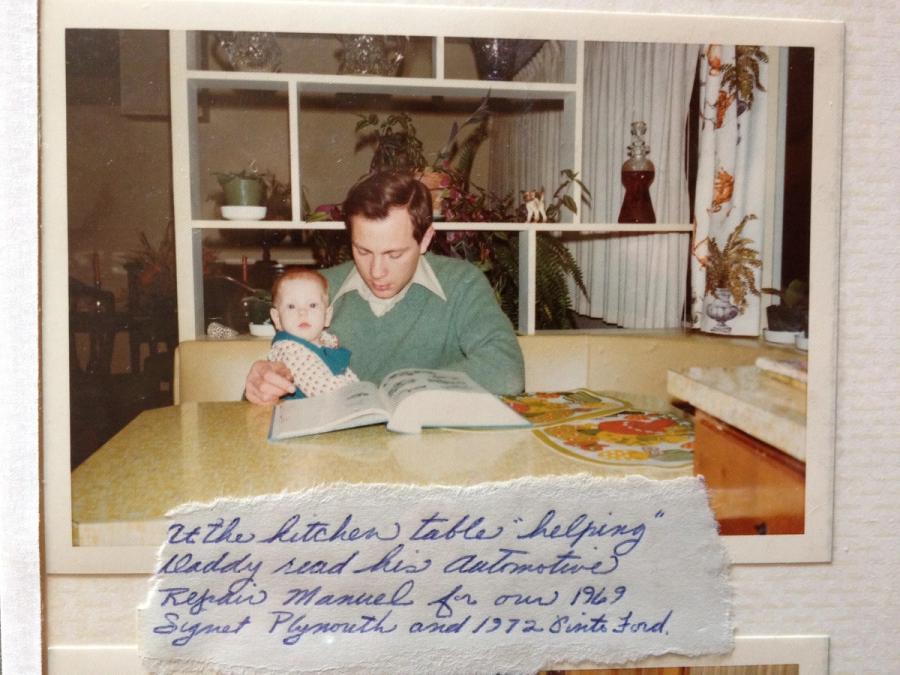
Old album photo of reading with Dad, with my mother’s description
For the National Year of Reading, we’re trying as a country to fall back in love with reading. I could argue that reading on my phone IS reading, but I know in my heart that these quick-hit blips aren’t the same as getting stuck into a story book with a long, involved narrative, or a non-fiction book where I spend enough time finding out about something that it sticks with me and makes me think about the world differently.
I’m writing this article to talk about children reading, but I think it all starts first with us as adults. Why should children want to read when they don’t see grownups reading? If their only encounter with reading is at school where they’re tested on what they’ve read, I can’t blame them if they see finishing school as a blessed relief from reading and books.
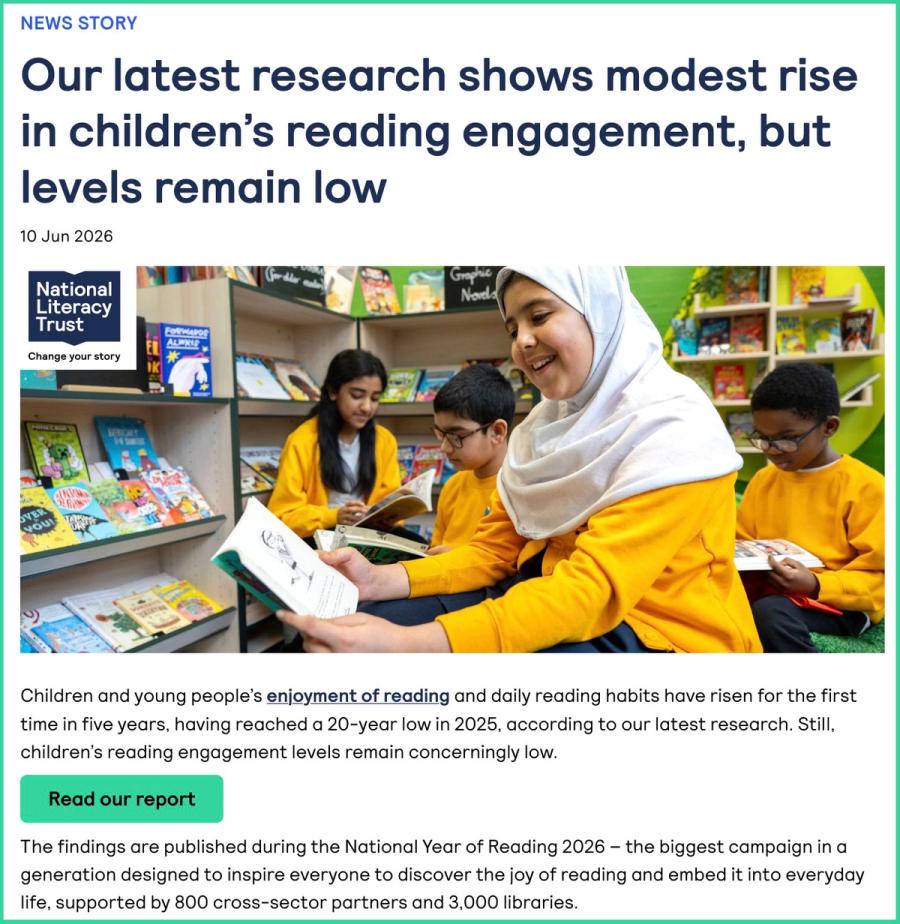
Today the National Literacy Trust published a report that says there’s been a slight rise in reading engagement, but we still have a long way to go to get back to pre-Covid levels.
So I thought I’d dive into the subject of reading and share what I’ve picked up, as a children’s book writer and illustrator and also from working with children in schools.
First, why is reading important?
If children are gaining basic literacy skills, why should it matter if they don’t want to read in their spare time? Here are just a few possible answers:
- Reading lifts children out of their day-to-day lives and lets them explore other possibilities. I recently heard about a school pupil in the coastal town of Hastings who had never even been to the seafront or seen the ocean. If your only experience is the few roads where you live, it’s awfully hard to develop outside interests. The bullies at school and the playground gossip is all there is, and for many children, that’s seriously depressing stuff. To be able to imagine a world outside of the one you’re stuck in can be a lifeline; it certainly was for me. You could say that video reels provide the same window to the world, but anyone can post a Tik Tok reel, for any reason, wholesome or sinister, and there isn’t a lot of vetting of the content. And books don’t come with social-media-style conversation that can quickly turn nasty or bullying. Not to say that all books are harmless, but at least a child won’t have their playground nemesis butting in at 3am.
- Reading helps us see things from different perspectives. We can get into the mind of a rabbit in the warren of Watership Down, or laugh at the hijinks of a very annoyed goose in Gordon the Meanest Goose on Earth. We can travel the world - even other worlds! - discover people who deal with their problems differently than we might have imagined, or be inspired by unexpected potential careers.
- Books can make us laugh. Humour isn’t only a great way to get kids reading, but it’s valuable in itself: it teaches us about language, and playing with words. It takes situations and turns them on their heads, making us ask questions about things we take for granted.
If reading is so important, how can we encourage it?
- Read aloud to children. Many parents think they don’t have time for reading together, or bedtime stories. But parents DO need to spend time with their children for them to grow into healthy adults, and sometimes it’s difficult for parents to know what to talk about with their children. Reading is a gift this way: when you cuddle up together with a book, you don’t have to worry about what to say, it’s all written out there for you. Don’t skip this moment of cosiness and, if possible, keep reading to children even as they get older. I have a friend who read to his son even into his early teenage years, and it was a way they were able to spend time together. When my husband and I first got married, we read to each other - I’d put my head on Stuart’s lap while he read - and it was incredibly romantic and cosy. We don’t do that so much now, but I’d quite like to go back to it. Imagine you’re a child, sneaking out of bed, and you discover one of your parents reading to the other. You’d want to be a part of that snug circle of intimacy.
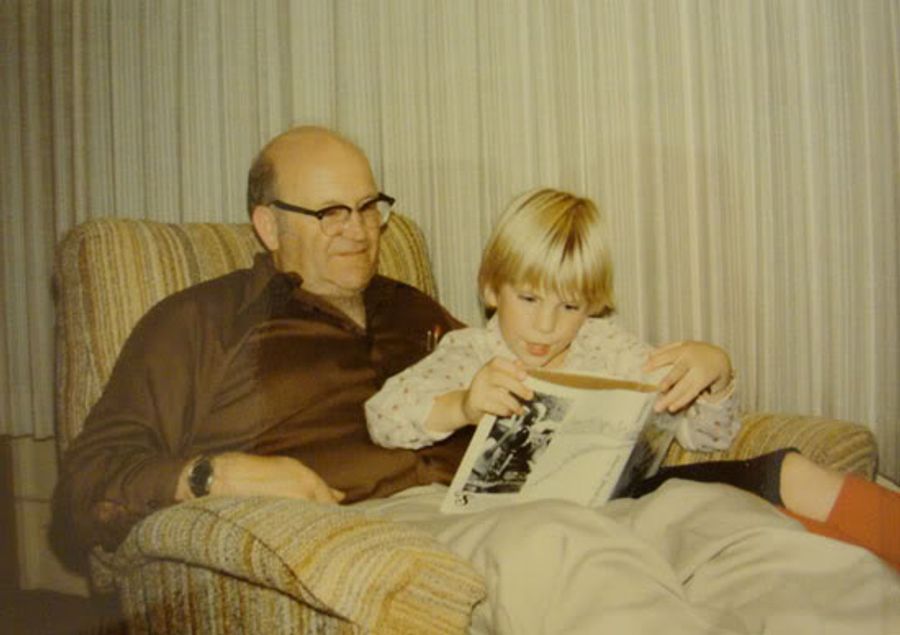
Reading funny poems from ‘Where the Sidewalk Ends’ with my grandpa
- Read in front of children. Let children see that reading is something you enjoy. Talk about books with them if you can, pick out books together.
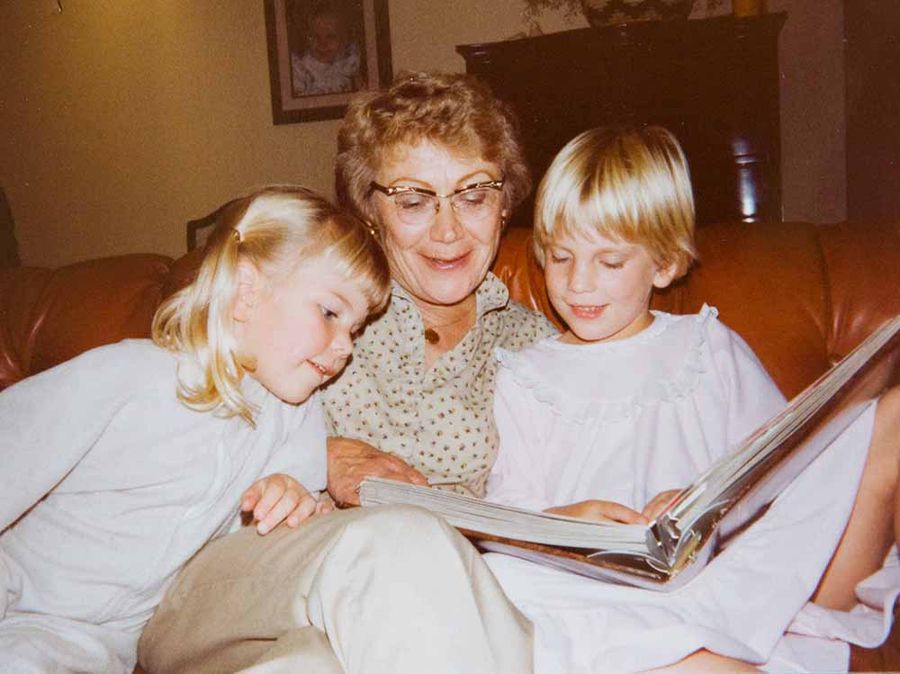
My little sister and me, reading with our grandma
- Visit the library. Libraries are a gift to parents who could never keep up with buying the sheer number of books a child can read once they get going. Make visiting the library a regular thing, where you and the children all pick out books for yourselves. Take part in library story hours and free activities.
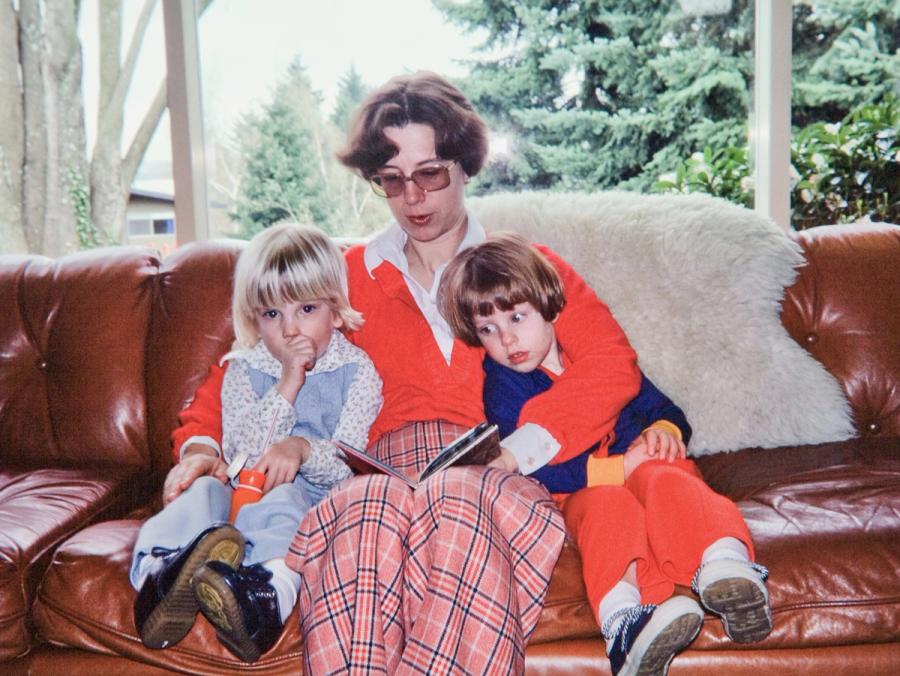
Reading with family friends
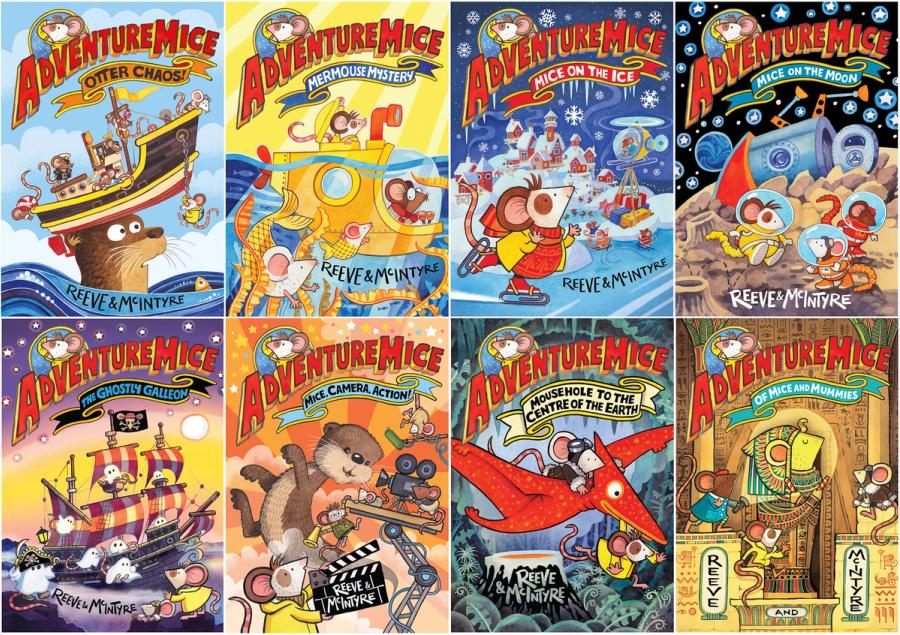
- Value illustration and comics. In the past, many adults tried to wean children off book with pictures, thinking that pictures stunted their imaginations. But it’s important to develop visual imaginations; pictures can help us have a wider vocabulary for what we see in our heads. Visual literacy helps us ask questions about the pictures we see, instead of accepting whatever’s put in front of us. More recently, people are understanding the illustrated books and comics are valuable hooks that keep children and teenagers reading. Pay attention to the names of the illustrators as well as the writers; children may find the pictures just as inspiring as the words. When Philip and I came up with the Adventuremice books, we had already seen a child reading an illustrated book, and when he turned to a page without pictures, we saw him put it down. So we decided that every page turn in our books would reveal another picture, as an anchor for children to keep reading.
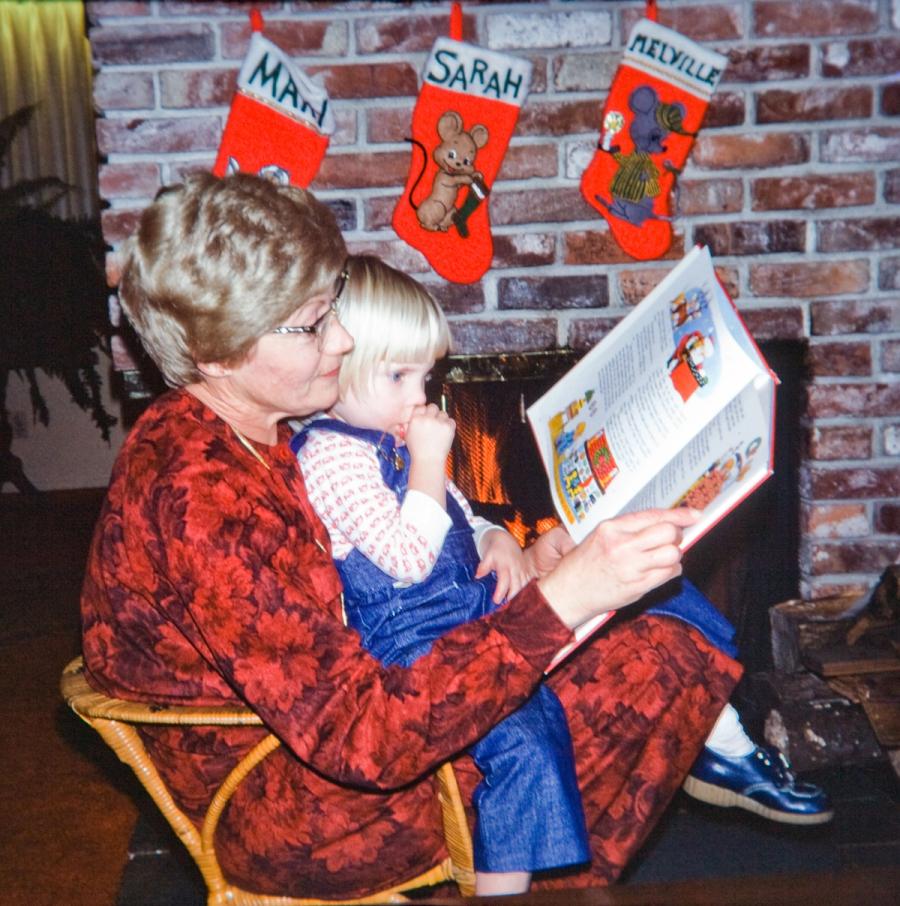
Reading with Grandma. Note the mouse Christmas stockings, a foreshadowing of Adventuremice to come…
- Seek out series. When I was in primary school, I remember being nervous about checking out totally unfamiliar books. What if I didn’t like them? Also, I wasn’t very good at browsing; I only realised much later that browsing books is a skill not everyone develops. That’s why some grownups will plunge into a bookshop or library with glee, while others will hang back uncomfortably unless they’re looking for a specific book. My saving grace at my primary school library was the long shelf full of Nancy Drew mystery books, because they had bright yellow matching spines. I didn’t even like the books all that much, but they were good enough. The yellow spines drew me to them week after week, to the point where the school librarian asked me in exasperation why I didn’t check out something else. (That didn’t help, I just looked back at her silently, cringing in hot embarrassment.) If only I could have found another series I enjoyed, I would have ripped through them with relief. And I did, eventually, with the Black Stallion books, Sweet Valley Twins, The Babysitter’s Club, and Sweet Valley High. I’ve never forgotten that sense of security I found when I discovered a series I liked, and the confidence it gave me to keep reading. As authors, the Adventuremice series has been a blessing to Philip Reeve and me, too, because we don’t have to introduce each new book from scratch. Children already know and love the characters and are happy to find out where they go next. If you’re buying a gift for a child, consider buying one or two books from a series, and if they connect with the books, they may go on to read all the others. (For the Adventuremice books, we’ve designed them so that readers can start anywhere in the series; there’s no need to begin with the first book.)
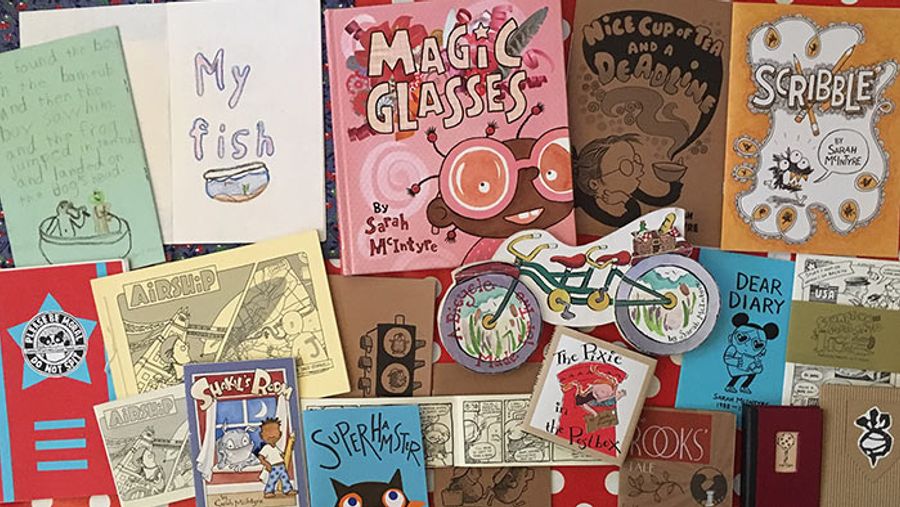
- Give children the materials they need to make their own books. It might just be folded paper and coloured pencils, but that’s enough! I have a theory that reading is a bit like cooking: when you’ve learned how to make interesting dishes, you start taking more notice of the flavours in the food you eat, and appreciating the work that went into it. A child’s book doesn’t need to be long: one folded piece of paper provides a front cover, back cover, and two pages inside for a story. Here’s a book I made, that my mother saved and bound into covers with fabric glued over them.
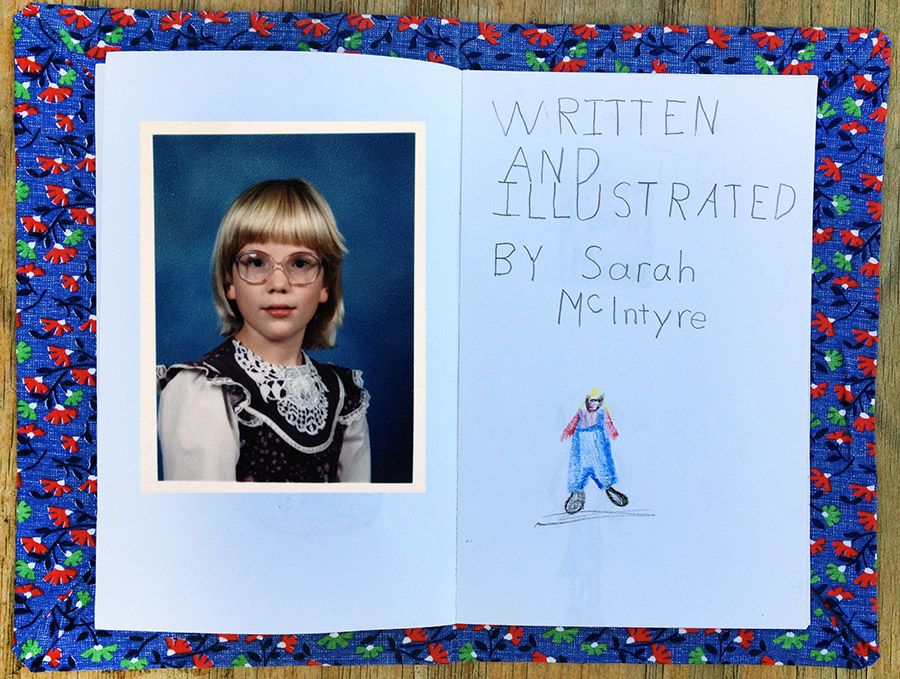
And some more books I’ve made for myself over the years, without waiting around for a publisher:
- If you’re a teacher, introduce reading into the classroom. Read books to your children, a chapter at a time. Let the children read for ten minutes a day, whatever they want to read, without any tests. My second grade teacher had a reading corner with bookshelves and cushions, and if we finished our work early, we could snuggle up there with a book. I wasn’t a terribly happy second-grader, and this was one of the highlights of my day. I remember having a conversation with another child about one of the books on the shelf (The Runaway Robot by Lester Del Ray) and being slightly staggered; it was the first time I’d had a non-combatative or non-demeaning conversation with anyone in a long time. The conversation made my chest ache afterward with the goodness of it, I felt seen. Classroom reading may not show up in your Ofsted rankings, but you’ll be playing the long game. If they find a love of reading now, you’ve given them a gift for a lifetime.
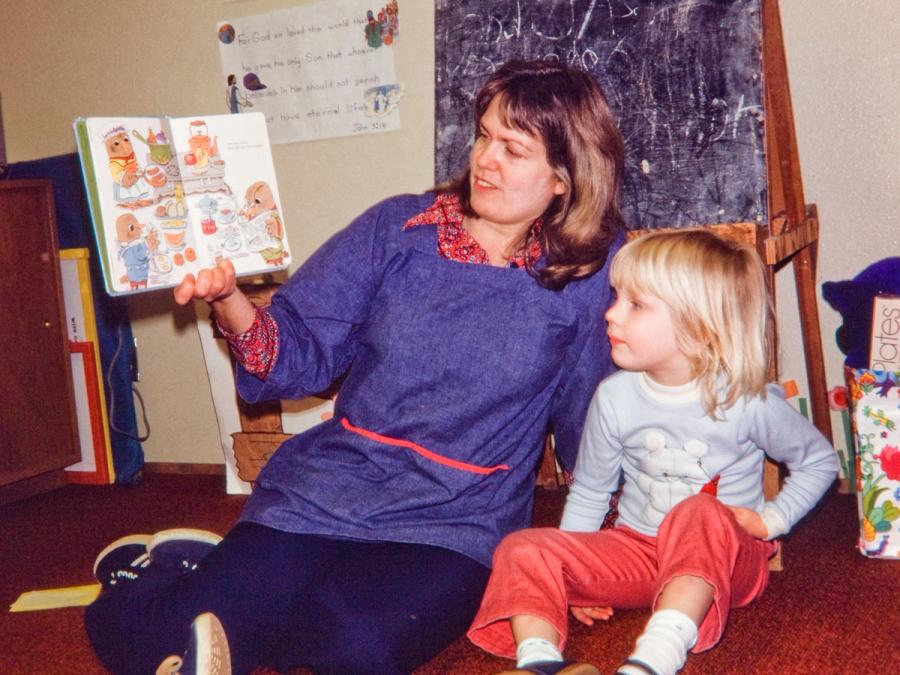
Listening to my pre-school teacher Mrs Whitmer read
…Right, now I should get off this blog and go read a book! See you later! xx
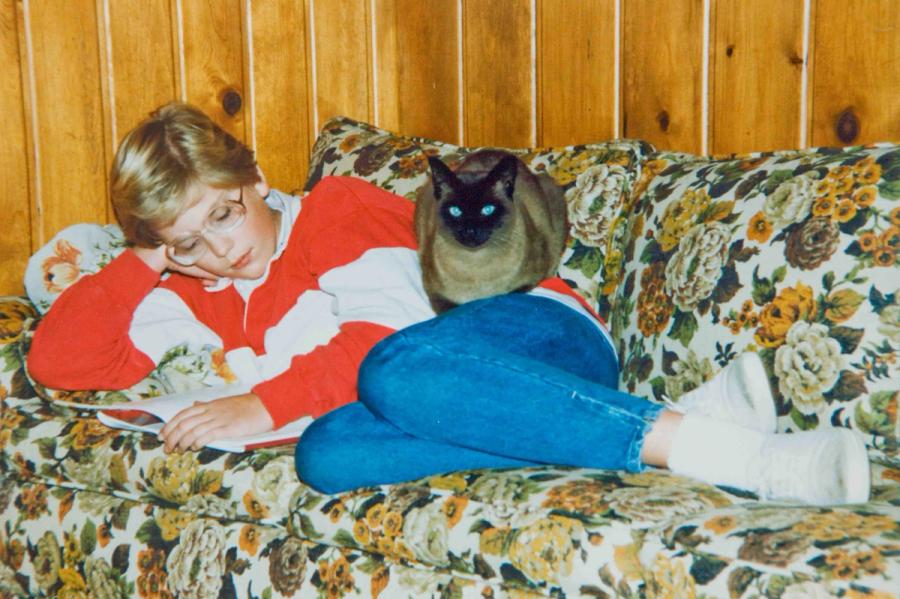
Reading with the cat